


Unveiling Finland’s Highland Havens: Exploring the Enchanting Fell Villages of the North
Finland, a nation often characterized by its thousands of lakes, dense forests, and the vibrant hum of its modern cities, holds a secret whispered on the winds of its northern reaches: a landscape of ancient fells and remote, enchanting villages. When one imagines "mountain villages," the mind often conjures images of the jagged peaks of the Alps or the dramatic slopes of the Rockies. Finland, however, offers a profoundly different, yet equally captivating, highland experience. Here, "mountains" are known as tunturit – fells – ancient, rounded hills that rise above the tree line, sculpted by millennia of ice and wind. It is within the embrace of these majestic fells that Finland’s unique "mountain villages" thrive, offering a journey into a world of profound silence, rich Sámi culture, and unparalleled natural beauty.
This article invites you to explore the hidden gems of Finnish Lapland and the northern regions, to understand what defines these fell villages, what makes them tick, and why they represent an unforgettable adventure for the discerning traveler seeking solace, authenticity, and a deep connection with nature.
Redefining the "Mountain" in Finland: The Majesty of the Fells
To truly appreciate Finland’s highland villages, one must first understand the Finnish concept of a tunturi or fell. Unlike the towering, geologically young mountains of other continents, Finnish fells are remnants of ancient mountain ranges, worn down over eons by glaciers and erosion. Their characteristic rounded tops and gentle slopes belie their profound geological age and the sheer scale of the wilderness they dominate. Rising often above 500 meters, but sometimes reaching just over a thousand meters (like Halti, Finland’s highest point at 1,324 meters), these fells create expansive, treeless plateaus known as paljakka. It is this unique treeless zone, stretching for miles, that defines the highland landscape and shapes the character of the villages nestled within their valleys or perched on their slopes.
The regions where these fell villages are found are primarily Finnish Lapland and parts of Koillismaa, stretching across the Arctic Circle. This is a land of extremes, where winter brings endless twilight and dazzling Northern Lights, and summer bathes the landscape in the glow of the Midnight Sun. The very existence of these villages is a testament to human resilience and ingenuity, adapting to the harsh yet beautiful conditions of the Arctic environment.
The Heartbeat of the Highlands: Life in a Finnish Fell Village
Life in a Finnish fell village moves to a rhythm dictated by the seasons and the land. These are not bustling towns, but rather close-knit communities, often small and self-sufficient, where traditional ways of life are preserved alongside modern conveniences. The architecture is typically Finnish, characterized by sturdy wooden buildings, often painted in warm ochre, red, or forest green, designed to withstand the harsh winters. Many homes and public buildings feature generous windows to maximize natural light, especially during the darker months.
The population density is sparse, meaning that solitude and peace are abundant. The air is crisp, clean, and often carries the scent of pine and peat. In summer, the sounds of birdsong and the rustle of leaves dominate, while in winter, an almost absolute silence descends, broken only by the crunch of snow underfoot or the distant howl of a husky.
Villages like Kilpisjärvi, nestled at the "arm" of Finland against the Norwegian and Swedish borders, or Hetta, the administrative center of Enontekiö municipality, offer a glimpse into this unique way of life. These are places where locals often combine traditional livelihoods like reindeer herding or fishing with services for the growing number of nature tourists. Community centers, small local shops, and guesthouses form the social hubs, fostering a strong sense of belonging among residents. The emphasis is on practicality, sustainability, and a deep respect for the surrounding wilderness, which is not merely a backdrop but an integral part of daily existence.
A Tapestry of Culture: The Enduring Sámi Heritage
No exploration of Finland’s fell villages would be complete without acknowledging the profound and enduring presence of the Sámi people, the indigenous inhabitants of Sápmi (Lapland), a region spanning parts of Norway, Sweden, Finland, and Russia. Many of Finland’s fell villages, particularly those in the northernmost municipalities, are situated within the Sámi Homeland, and Sámi culture is woven into the very fabric of these communities.
The Sámi have lived in harmony with the fells for thousands of years, their culture deeply intertwined with reindeer herding, fishing, hunting, and the unique challenges and opportunities presented by the Arctic environment. Visitors to these villages have the invaluable opportunity to learn about Sámi traditions, language, and worldview. Museums like Siida in Inari, the Sámi Museum and Nature Centre, offer comprehensive insights into Sámi history, art, and contemporary life.
Respectful engagement with Sámi culture is paramount. This can mean visiting local artisans to admire and purchase duodji (Sámi handicrafts like intricately carved reindeer antler, woven bands, or felted items), listening to joik (a unique form of Sámi vocal music), or participating in cultural events. Understanding the Sámi concept of eallin birra – "life around" – emphasizes a holistic view of nature and community that deeply resonates with the ethos of these fell villages. Their traditions of sustainable living and deep respect for nature offer invaluable lessons in an increasingly fast-paced world.
Seasons of Splendor: Activities and Experiences in the Fells
The magic of Finland’s fell villages transforms with each season, offering a diverse array of experiences that cater to every adventurer.
Winter Wonderland (December – April):
This is arguably the most iconic time to visit. The fells are blanketed in deep, pristine snow, creating a breathtaking landscape of white.
- Northern Lights Hunting: The dark, clear Arctic nights provide prime conditions for witnessing the mesmerizing Aurora Borealis dancing across the sky. Remote fell villages, far from light pollution, offer unparalleled viewing opportunities.
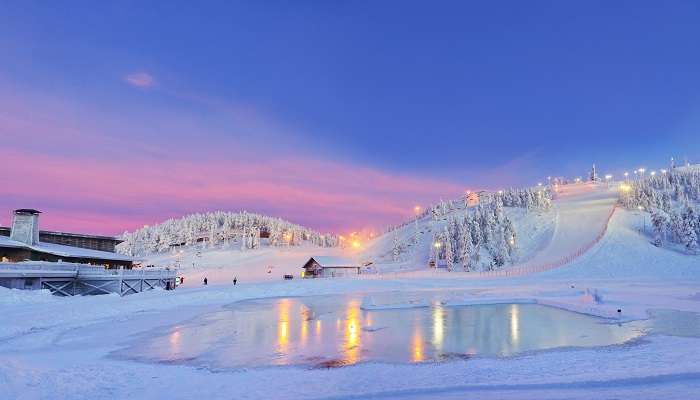
- Skiing and Snowboarding: While not alpine resorts in the traditional sense, fells like Ylläs, Levi, Ruka, and Pyhä offer excellent downhill skiing and snowboarding with long, uncrowded slopes. Cross-country skiing, however, is king, with hundreds of kilometers of well-maintained trails winding through silent forests and over open fells.
- Husky and Reindeer Safaris: Experience the thrill of being pulled by a team of enthusiastic huskies or glide silently through the snow on a reindeer sleigh, connecting with traditional Sámi transportation methods.
- Snowshoeing and Ice Fishing: Explore the serene wilderness on snowshoes or try your hand at ice fishing on a frozen lake, drilling a hole and patiently waiting for a bite.
- Sauna Culture: After a day in the cold, nothing is more invigorating than a traditional Finnish sauna, often followed by a refreshing dip in an avantouinti (ice hole) if you’re brave enough.
Spring Awakening (May – June):
As the snow begins to melt, the landscape slowly reawakens. The days grow longer, and the first migratory birds return.
- Meltwater Fishing: The rivers and lakes swell with meltwater, offering excellent opportunities for fly fishing.
- Early Hiking: The lower trails become accessible, revealing nascent greenery and blooming wildflowers.
- Birdwatching: The Arctic spring is a crucial nesting period, attracting a variety of unique bird species.
Midnight Sun Summer (June – August):
The fells come alive under the perpetual daylight of the Midnight Sun, where the sun never sets above the Arctic Circle.
- Hiking and Trekking: This is prime hiking season. National parks like Pallas-Yllästunturi and Urho Kekkonen offer well-marked trails ranging from easy day hikes to challenging multi-day treks, often with wilderness huts available. The fells offer expansive views and unique Arctic flora.
- Canoeing and Kayaking: Explore the numerous lakes and rivers, paddling under the ethereal glow of the Midnight Sun.
- Berry and Mushroom Picking: The forests and fells are abundant with wild berries (cloudberries, lingonberries, blueberries) and edible mushrooms, a cherished local pastime.
- Fishing: The long daylight hours mean more time for fishing in pristine waters.
Autumn Colors (Ruska) (September – October):
Perhaps the most visually stunning season, ruska transforms the fells into a riot of reds, oranges, and yellows.
- Photography: The vibrant foliage against the deep blue skies and crisp air creates breathtaking photographic opportunities.
- Hiking and Foraging: Enjoy the last of the accessible trails before winter sets in, and continue foraging for late-season berries and mushrooms.
- Northern Lights Return: As the nights grow darker, the Aurora Borealis begins its annual display, often visible against the backdrop of the autumnal colors.
Gastronomy of the Fells: A Taste of the Wild
The cuisine of Finland’s fell villages is a reflection of its environment: pure, hearty, and deeply connected to nature’s bounty. Local ingredients are king, often foraged, hunted, or fished directly from the surrounding wilderness.
- Reindeer Meat: A staple of the Arctic diet, reindeer is prepared in countless ways – sautéed (poronkäristys), smoked, dried, or as a hearty stew. Its lean, gamey flavor is distinctive and delicious.
- Fish: From the pristine lakes and rivers come whitefish, pike, perch, and Arctic char. Smoked, grilled, or cured, fresh fish is a delicacy.
- Wild Berries: Cloudberries (lakka), with their unique sweet-tart flavor, are highly prized and often turned into jams, liqueurs, or served with leipäjuusto (squeaky cheese). Lingonberries and blueberries are also abundant.
- Mushrooms: Forest mushrooms, particularly chanterelles and porcini, are collected and used in soups, sauces, and stews.
- Leipäjuusto (Finnish Squeaky Cheese): A mild, firm cheese traditionally made from cow’s udder milk, often grilled or baked until slightly caramelized, and served with cloudberry jam.
- Rye Bread: Dark, dense rye bread is a constant companion to any meal, providing sustenance and flavor.
Dining in a fell village is an experience in itself, often taking place in cozy, wood-paneled restaurants or traditional Sámi kota (teepee-like structures) where food is cooked over an open fire. It’s a chance to savor flavors that are genuinely wild and untamed.
Practicalities and Responsible Tourism
Venturing into Finland’s fell villages requires a degree of planning and a commitment to responsible tourism.
- Getting There: The easiest way to reach these regions is by flying to airports like Rovaniemi, Kittilä, or Ivalo, followed by a bus transfer or rental car. Overnight trains from Helsinki to Rovaniemi or Kolari offer a scenic and comfortable option.
- Accommodation: Options range from cozy log cabins (mökit), often with their own saunas, to guesthouses, small hotels, and wilderness huts. Booking in advance, especially during peak seasons, is advisable.
- What to Pack: Layered clothing is essential, regardless of the season. In winter, serious cold-weather gear is a must. Sturdy hiking boots are crucial for summer and autumn.
- Respect for Nature: Finland operates under "Everyman’s Rights" (jokamiehenoikeus), allowing access to nature, but this comes with the responsibility to leave no trace, respect private property, and not disturb wildlife.
- Respect for Culture: When engaging with Sámi communities, always do so with respect and an open mind. Ask for permission before photographing people, and support local Sámi businesses.
- Safety: Be prepared for rapidly changing weather conditions, especially in the fells. Inform someone of your hiking plans, carry a map and compass/GPS, and understand the local emergency procedures.
Conclusion: A Journey for the Soul
Exploring Finland’s fell villages is not merely a vacation; it is a journey for the soul. It’s an opportunity to disconnect from the frantic pace of modern life and reconnect with something ancient and profound. It’s about witnessing the raw, untamed beauty of the Arctic wilderness, feeling the immense silence of the fells, and experiencing the warmth of resilient communities.
These "mountain villages," with their unique blend of Finnish and Sámi culture, the ever-changing tapestry of the seasons, and a landscape that inspires awe and introspection, offer an experience unlike any other. They challenge our preconceptions of what a mountain landscape can be and invite us to discover a different kind of grandeur – one of subtle beauty, deep history, and an unwavering connection to the wild heart of the North. For those seeking authenticity, tranquility, and an unforgettable adventure, Finland’s highland havens await.