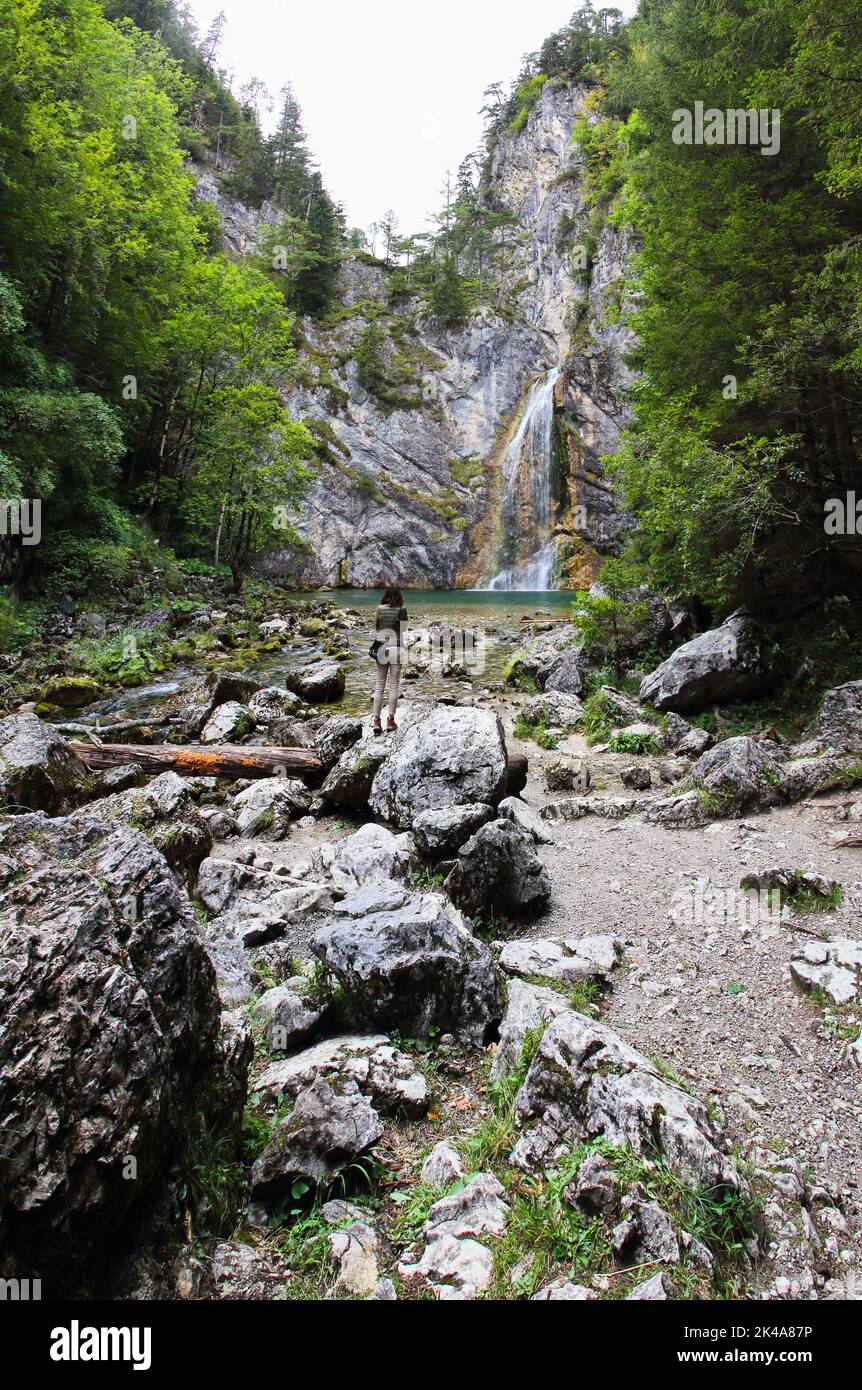


Austria’s Veiled Cascades: A Journey into the Heart of Hidden Waterfalls
Austria, a land synonymous with majestic Alps, pristine lakes, imperial cities, and the melodious strains of classical music, holds within its rugged embrace a secret world often overlooked by the casual traveler. Beyond the well-trodden paths to its famous peaks and the bustling charm of Vienna or Salzburg, lies a network of hidden waterfalls – ethereal cascades that plunge into secluded grottoes, whisper through ancient forests, and roar through remote valleys. These aren’t the widely publicized tourist attractions like the Krimml Falls, but rather elusive gems, demanding a spirit of adventure and offering unparalleled tranquility and breathtaking beauty to those who seek them out.
The Allure of the Unseen: Why Hidden Waterfalls?
In an age of instant gratification and crowded landmarks, the quest for a hidden waterfall is an antidote. It’s a pursuit of authentic discovery, a journey into the untouched heart of nature where the only sounds are the rush of water, the rustle of leaves, and the distant chirping of birds. These veiled cascades represent an escape – a chance to disconnect from the digital world and reconnect with the raw, untamed power and serenity of the natural environment. Finding them often involves navigating less-defined trails, poring over detailed topographical maps, or even relying on local wisdom, making the reward all the more profound. The journey itself becomes an integral part of the experience, a meditation on the beauty of effort and the joy of unexpected revelation.
Austria’s Hydrographic Tapestry: A Land Forged by Water
To understand why Austria is such a fertile ground for waterfalls, one must look to its geography and geology. Dominated by the Eastern Alps, the country is a colossal water reservoir. Glaciers, remnants of ancient ice ages, still cling to the highest peaks, providing a constant source of meltwater. High annual precipitation, both rain and snow, feeds countless streams and rivers that carve their way through the diverse landscape – from towering granite cliffs to soft limestone valleys and ancient primeval forests.
The dramatic elevation changes inherent in a mountainous country create perfect conditions for water to tumble, plunge, and cascade. Over millennia, these relentless forces have sculpted the landscape, forming deep gorges, creating natural amphitheaters, and revealing the underlying geology in spectacular fashion. Every hidden waterfall tells a story of geological time, of erosion and deposition, and of the enduring power of water.
A Spectrum of Seclusion: Types of Hidden Waterfalls
Austria’s diverse terrain means that its hidden waterfalls come in a myriad of forms, each offering a unique spectacle:
-
The High Alpine Giants: Tucked away in the folds of the Hohe Tauern National Park or the Ötztal Alps, far above the tree line, these waterfalls are often fed directly by glacial meltwater. They are characterized by their immense power, the frigid temperature of their spray, and the stark beauty of their surroundings. Reaching them often involves challenging multi-day hikes, navigating rocky scree fields, and crossing snow patches even in summer. The reward is a raw, untamed display of nature’s force, often framed by dramatic peaks and shimmering glaciers. These cascades might not be named on tourist maps, but their thunderous roar is an undeniable presence in the quiet wilderness.
-
The Forested Emerald Falls: Deep within the verdant forests of the Salzkammergut, the Styrian Alps, or the Bregenzerwald, one finds waterfalls that are more gentle, more intimate. These are often multi-tiered cascades, where water tumbles over moss-covered rocks, through ancient root systems, and into crystal-clear pools. The air here is cool and humid, thick with the scent of pine and damp earth. Sunlight filters through the dense canopy, creating dappled patterns on the water and illuminating the vibrant green of ferns and mosses. Discovering these requires keen observation, following faint deer trails or the subtle sound of rushing water that guides you deeper into the woods. They are sanctuaries of peace, where time seems to slow down.
-
The Subterranean Secrets: Austria’s Karst regions, particularly in Styria and Lower Austria, are honeycombed with limestone caves and underground rivers. While truly hidden in the darkness, some waterfalls within these systems are accessible to intrepid explorers with proper caving gear and expertise. Here, the water plunges into dark abysses, creating subterranean echoes that resonate through the rock. The experience is otherworldly, a glimpse into a world rarely seen by human eyes, where the forces of water work in perpetual darkness. These are for the truly adventurous, often requiring guided tours for safety.
-
The Valley’s Veiled Veins: Many of Austria’s smaller, less-frequented valleys, often tributaries to major rivers, hold countless unnamed waterfalls. These might be seasonal, gushing powerfully after heavy rains or snowmelt, and reducing to a gentle trickle during drier periods. They are often stumbled upon by hikers exploring off-the-beaten-path routes, surprising discoveries that add an unexpected highlight to a journey. They can be small, delicate horsetails or wider, fan-shaped falls that spread over a rock face, each a miniature masterpiece of nature.
The Journey of Discovery: How to Find the Unfindable
Finding hidden waterfalls in Austria is less about following signs and more about cultivating an explorer’s mindset.
- Topographical Maps: Detailed maps (e.g., from Alpenverein or BEV) are your best friend. Look for contour lines that indicate steep drops, blue lines representing streams, and areas with dense forest cover or remote terrain. Often, a combination of steepness and proximity to a water source will hint at a potential cascade.
- Local Knowledge: Engaging with locals in small alpine villages can yield invaluable insights. Farmers, foresters, or seasoned hikers often know of "secret" spots not marked on any map. A friendly chat over a beer in a Gasthaus might unlock a gem.
- Off-Season Exploration: During shoulder seasons (late spring, early autumn), trails are less crowded, and the landscape often reveals more. The roar of a waterfall is less likely to be drowned out by human chatter.
- Trust Your Senses: Sometimes, it’s simply following the sound of rushing water when you’re deep in the wilderness. The scent of damp earth and moss, combined with a noticeable drop in temperature, can also indicate a hidden grotto.
- Embrace the Detour: The most rewarding discoveries often come from straying slightly from the main path, taking an unmarked turn, or simply following your intuition.
When to Visit: Seasons of Splendor
Each season paints Austria’s hidden waterfalls in a different light:
- Spring (April-June): This is arguably the most spectacular time. Snowmelt from the high peaks swells every stream and river, transforming even the smallest trickle into a powerful cascade. The forests are bursting with new life, and the air is crisp and invigorating.
- Summer (July-August): While popular for hiking, some smaller falls might have reduced flow. However, the lush greenery is at its peak, and the cool spray of a waterfall offers a refreshing respite from the summer heat.
- Autumn (September-October): The landscape transforms into a breathtaking palette of golds, reds, and oranges. While water levels might be lower than in spring, the visual spectacle of the surrounding foliage against the clear water is unforgettable. The quietude of the forests is also deeply appealing.
- Winter (November-March): For the truly adventurous, winter offers a magical, frozen wonderland. Many waterfalls transform into spectacular ice formations, creating glistening, ephemeral sculptures. This requires specialized gear, knowledge of avalanche safety, and often, snowshoes or skis to access.
Preparing for the Expedition: Respecting the Wild
Embarking on a quest for hidden waterfalls demands preparation and a deep respect for nature:
- Navigation: Always carry a detailed topographical map and a compass, and know how to use them. A fully charged GPS device or smartphone with offline maps is also advisable, but not a replacement for traditional navigation skills.
- Appropriate Gear: Sturdy, waterproof hiking boots with good ankle support are essential. Dress in layers to adapt to changing weather conditions. Bring rain gear, even on a sunny day, as mountain weather can be unpredictable.
- Safety First: Inform someone of your route and expected return time. Be aware of weather forecasts and potential hazards like slippery rocks, steep ascents, or sudden changes in water levels. Do not attempt to cross swollen rivers or climb unstable rock faces.
- Food and Water: Carry ample water and energy-rich snacks. There will be no shops or huts in these remote locations.
- Leave No Trace: This principle is paramount. Pack out everything you pack in. Do not disturb wildlife or plants. Stay on existing paths where possible to minimize erosion. Leave the waterfall as pristine as you found it for future adventurers.
- Photography Ethics: While capturing the beauty is tempting, prioritize the experience. Be mindful of your surroundings and avoid disturbing the natural setting for a perfect shot.
Beyond the Veil: The Profound Reward
The journey to a hidden waterfall in Austria is more than just a hike; it’s an immersion. It’s about the scent of pine needles underfoot, the feeling of crisp mountain air on your skin, the distant murmur growing into a powerful roar. It’s about the moment you round a bend, or push through a curtain of trees, and suddenly, there it is – a ribbon of white against dark rock, a shimmering curtain of water tumbling into an emerald pool, a secret unveiled.
These are the moments that etch themselves into memory, offering a sense of accomplishment, peace, and profound connection to the natural world. Austria’s hidden waterfalls are not just geographical features; they are sanctuaries for the soul, waiting patiently to be discovered by those willing to venture off the beaten path and listen to the wild heart of the mountains. To find one is to truly find a piece of Austria’s untouched magic, a secret whispered only to those who seek it with open hearts and adventurous spirits.