


Savouring the Serenity: An Epicurean Odyssey Through Laos, the Undiscovered Heart of Southeast Asian Cuisine
Laos whispers. Unlike its boisterous neighbours, Thailand and Vietnam, the Land of a Million Elephants reveals its treasures with a quiet grace, a gentle smile, and an understated elegance. For the intrepid traveller, this subtlety extends profoundly to its culinary landscape. To embark on a culinary journey in Laos is to delve into an authentic, deeply traditional, and remarkably distinctive cuisine that, while sharing a lineage with regional counterparts, stands proudly on its own, offering a symphony of flavours that are at once robust, fresh, fiery, and deeply comforting.
Often overshadowed by the more famous kitchens of Southeast Asia, Laotian cuisine is a true hidden gem, a testament to a nation that values freshness, communal eating, and a profound connection to its land and rivers. It is a cuisine built on the pillars of sticky rice, pungent fermented fish sauce (padaek), a riot of fresh herbs, and an unwavering commitment to balancing the fundamental tastes of spicy, sour, salty, and a unique, often bitter, note. Sweetness, so prevalent elsewhere, takes a backseat here, allowing the raw, vibrant intensity of ingredients to shine.
The Unshakeable Foundation: Sticky Rice and Padaek
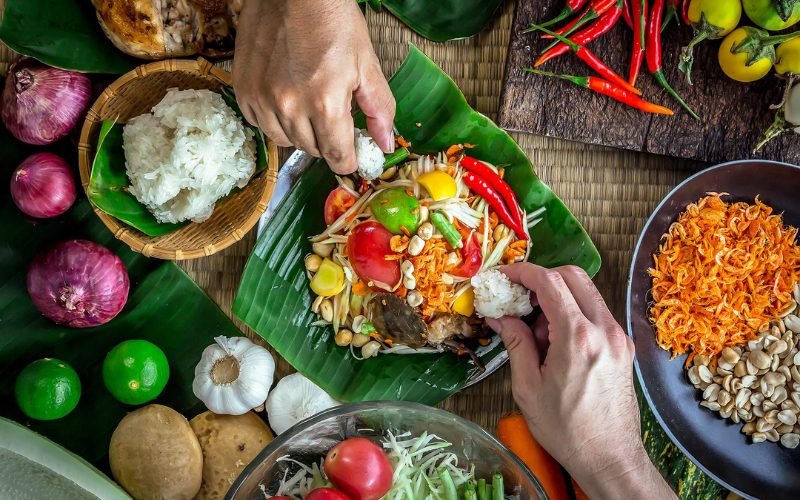
No exploration of Laotian food can begin without acknowledging the undisputed king of the table: khao niao, or sticky rice. It is not merely a side dish; it is the very soul of Laotian sustenance, consumed at almost every meal, from breakfast to dinner. Served in a small, hand-woven bamboo basket (tip khao), sticky rice is eaten by hand, rolled into small, pliable balls and used to scoop up gravies, dips, and morsels of meat and vegetables. Its slightly sweet, nutty flavour and satisfying chewiness provide the perfect counterpoint to the often intense and complex flavours of Laotian dishes. The act of sharing khao niao from a communal basket is itself a sacred ritual, embodying the warmth and generosity of Laotian hospitality.
Equally foundational, though perhaps more polarizing for the uninitiated, is padaek, the fermented fish sauce that defines the umami depth of Laotian cooking. Unlike the clear, refined fish sauce found in Thai and Vietnamese cuisine, padaek is thick, cloudy, and possesses a much stronger, more pungent aroma and flavour. It is the secret weapon, the indispensable ingredient that imparts a rich, earthy funk and unparalleled depth to almost every Laotian dish. To truly appreciate Laotian food is to embrace padaek; it’s not just an ingredient, but a flavour philosophy, a profound connection to the Mekong River and the traditional methods of preservation that have sustained generations.
Iconic Dishes: A Symphony of Spice, Sour, and Herbaceousness
With sticky rice and padaek as the bedrock, Laotian cuisine builds a towering edifice of unforgettable dishes. Foremost among these is Larb, often hailed as the national dish. More than just a salad, Larb is a vibrant, herbaceous, and intensely flavourful minced meat dish that is both a culinary staple and a cultural symbol. Typically made with pork, chicken, beef, or duck, it is cooked with a medley of fresh herbs like mint, coriander, spring onions, and shallots, then seasoned with lime juice, fish sauce, toasted ground sticky rice (khao khua) for a nutty texture, and a generous kick of chilies. The interplay of sour, spicy, salty, and umami, with a refreshing herbaceous lift, makes each bite an invigorating experience, perfectly scooped up with sticky rice.
Another essential culinary experience is Tam Mak Hoong, the Laotian version of green papaya salad. While sharing similarities with its Thai cousin (Som Tum), the Laotian rendition is typically more robust, spicier, and often includes the characteristic padaek, giving it a deeper, earthier umami. Made by pounding shredded green papaya, chilies, garlic, tomatoes, and long beans in a large mortar and pestle, Tam Mak Hoong is a vibrant explosion of fresh flavours and textures – crunchy, spicy, sour, and savoury, a true sensory delight.
Beyond these staples, the Laotian culinary repertoire continues to impress:
- Or Lam: This hearty, rustic stew, particularly popular in Luang Prabang, is a true embodiment of Laotian comfort food. It features a unique blend of vegetables, buffalo skin (sien moo), and often a choice of meat (pork or beef), simmered in a rich, fragrant broth thickened with sticky rice powder and seasoned with chili, lemongrass, and the essential sakhan (a woody vine with a peppery kick). Its flavour profile is complex, warm, and deeply satisfying.
- Sai Oua (Lao Sausage): A delectable, highly aromatic sausage that stands apart from its regional counterparts. Packed with minced pork, lemongrass, galangal, kaffir lime leaves, chilies, and a hint of padaek, it’s grilled until golden and slightly charred, offering a burst of zesty, spicy, and savoury notes with every bite.
- Mok Pa: A delicate and fragrant dish of fish steamed in banana leaves. The fish (often Mekong river fish) is marinated with lemongrass, galangal, kaffir lime, dill, chilies, and spring onions, then wrapped into neat parcels and steamed. The result is incredibly tender, moist fish infused with the aromatic spices, a gentle counterpoint to the more fiery dishes.
- Jeow: These ubiquitous dipping sauces are integral to every Laotian meal. From the spicy, smoky Jeow Bong (a chili paste with buffalo skin) to the more herbaceous Jeow Mak Keua (roasted eggplant dip) or the simple, fiery Jeow Mak Phet (fresh chili dip), jeow adds layers of flavour, heat, and texture, providing endless combinations to accompany sticky rice, grilled meats, and fresh vegetables.
Regional Flavours: From the Mekong to the Southern Plateaus
While a core set of dishes defines Laotian cuisine, regional variations add fascinating layers to the culinary journey.
- Luang Prabang: The UNESCO World Heritage city, nestled by the Mekong and Nam Khan rivers, offers a more refined, yet still authentic, culinary experience. Influenced by its royal past and French colonial legacy, you’ll find a delightful blend of traditional Lao dishes alongside excellent French bakeries and coffee shops. The morning market is a sensory explosion, offering fresh river fish, exotic fruits, and local delicacies. Cooking classes here are particularly popular, allowing visitors to immerse themselves in the preparation of dishes like Or Lam and Mok Pa. The riverine influence means a greater emphasis on fresh fish, often prepared grilled (Pa Ping) or steamed.
- Vientiane: As the capital, Vientiane boasts a broader culinary spectrum. While maintaining its strong Laotian identity in its bustling street food stalls and local eateries, it also offers a greater variety of international cuisine and fusion restaurants. The night market along the Mekong riverfront is a fantastic place to sample an array of street food, from grilled skewers to crispy fried snacks and refreshing fruit shakes.
- Southern Laos (Pakse & Champasak): This region, particularly around the Bolaven Plateau, is renowned for its fertile lands and coffee plantations. Here, the French influence is felt strongly in the excellent coffee culture. The cuisine tends to be heartier, with an abundance of fresh produce. Dishes featuring river fish remain prominent, and you might find unique local ingredients not commonly seen elsewhere.
The Culinary Experience: Markets, Street Food, and Communal Joy
The true heart of Laotian cuisine is experienced not in fancy restaurants, but in the vibrant chaos of local markets and the humble charm of street food stalls. Walking through a Laotian market is a feast for the senses: the earthy aroma of fresh herbs, the pungent tang of padaek, the sizzling sound of grilling meats, and the kaleidoscope of colourful fruits, vegetables, and spices. It’s here that the rhythm of daily life and the essence of the country’s culinary traditions truly come alive.
Street food is an integral part of the Laotian diet, offering delicious, affordable, and authentic meals. From crispy fried noodles and savoury skewers to freshly prepared spring rolls and sweet coconut pancakes, there’s an endless variety to explore. Eating street food is also an opportunity to connect with locals, to observe their culinary practices, and to feel the pulse of the city or town.
Crucially, Laotian meals are almost always communal. Dishes are placed in the centre of the table, and everyone shares, scooping up sticky rice with their hands and dipping it into various jeows or gravies. This communal style of eating fosters connection, conversation, and a sense of belonging, making every meal a truly social and enriching experience.
The French Legacy: Baguettes and Coffee
A delicious testament to its colonial past, Laos has gracefully integrated French culinary elements into its daily life. Freshly baked baguettes are a common sight, often split and filled with pâté, cold cuts, and fresh herbs to create a uniquely Laotian-French sandwich called khao jii pâté. The coffee culture, particularly prominent in the south, is also a direct legacy, with Laotian coffee gaining international recognition for its rich, robust flavour. Sipping a strong, sweet Lao coffee (often served with condensed milk) while watching life unfold on the Mekong is an essential Laotian experience.
Embracing the Journey: Tips for the Culinary Explorer
For those ready to embark on this epicurean odyssey, here are a few tips:
- Be Adventurous: Don’t shy away from trying new things, even if they look or smell unfamiliar. The most authentic flavours are often found off the beaten path.
- Embrace the Spice: Laotian food can be fiery. If you’re sensitive to chili, learn to say "boh pet" (not spicy) or "pet noi deuh" (a little spicy).
- Eat with Your Hands: Master the art of eating sticky rice by hand; it’s part of the experience.
- Visit Local Markets: Immerse yourself in the sights, sounds, and smells of a local market to understand the fresh ingredients that form the backbone of the cuisine.
- Take a Cooking Class: This is an excellent way to deepen your understanding of Laotian ingredients and cooking techniques, and to bring a piece of Laos home with you.
- Hydrate: With the heat and the spice, staying hydrated is key. Enjoy fresh coconut water, local fruit shakes, or the ubiquitous Beerlao.
Ultimately, a culinary journey through Laos is more than just sampling delicious food; it’s an immersion into the country’s soul. It’s about understanding the deep connection between the land, the rivers, and the people. It’s about savouring the slow pace of life, the genuine warmth of its inhabitants, and the quiet beauty of a cuisine that is unapologetically authentic, incredibly flavourful, and deeply rewarding. So, step off the well-trodden path, open your palate, and let Laos whisper its delicious secrets to you. You won’t be disappointed.