

Morocco’s Timeless Tapestry: Exploring Its Cultural Heritage Sites
Morocco, a land of enchanting contrasts, where the Sahara desert meets the Atlantic Ocean, and ancient medinas whisper tales of sultans and scholars, is an extraordinary destination for anyone seeking to immerse themselves in rich cultural heritage. Its strategic location at the crossroads of Africa, Europe, and the Middle East has forged a unique identity, a vibrant mosaic of Berber, Arab, Andalusian, and even Roman influences. This melting pot of civilizations has left an indelible mark, manifesting in an array of breathtaking cultural heritage sites that beckon travelers to step back in time. From the labyrinthine alleys of its imperial cities to the fortified kasbahs nestled in the Atlas foothills, Morocco offers an unparalleled journey through history, art, and tradition.
The UNESCO World Heritage list proudly features many of Morocco’s treasures, underscoring their universal value and the nation’s commitment to preserving its past. Exploring these sites is not merely sightseeing; it is an encounter with living history, a sensory immersion into a culture that cherishes its roots while embracing the future.
The Imperial Cities: Pillars of Moroccan Heritage
No exploration of Moroccan heritage is complete without delving into its four magnificent Imperial Cities: Fes, Marrakech, Meknes, and Rabat. Each served as a capital at various points in history, leaving behind a legacy of architectural grandeur, scholarly pursuits, and bustling commercial life.
Fes: The Spiritual and Intellectual Heart
Fes, often considered the spiritual and intellectual capital of Morocco, is a city frozen in time. Its Medina, Fes el-Bali, is the world’s largest car-free urban area and a UNESCO World Heritage site. Stepping through Bab Bou Jeloud (the Blue Gate) is like entering a medieval wonderland, a labyrinthine network of narrow alleys, bustling souks, and hidden squares. The air hums with the sounds of artisans hammering metal, merchants calling out their wares, and the distant call to prayer.
At the heart of Fes el-Bali lies the Al-Attarine Madrasa and the Bou Inania Madrasa, exquisite examples of Merinid architecture. These theological colleges, adorned with intricate zellige (mosaic tiles), carved cedarwood, and delicate stucco work, offer a glimpse into the intellectual prowess of medieval Morocco. The courtyard of Bou Inania, with its striking green-tiled minaret and central water feature, is particularly captivating.
Fes is also home to the University of Al-Qarawiyyin, founded in 859 AD, recognized by UNESCO and Guinness World Records as the oldest continuously operating university in the world. While not fully accessible to non-Muslims, its library and the exterior of the mosque complex hint at its profound historical significance as a center of learning.
A visit to Fes would be incomplete without witnessing the iconic Chouara Tannery, one of the oldest and largest tanneries in the world. Though the pungent aroma can be overwhelming, the sight of hundreds of dye vats filled with vibrant colors and workers toiling as they have for centuries is a powerful testament to enduring traditional crafts.
Marrakech: The Red City’s Vibrancy
Further south, Marrakech, the "Red City," pulsates with a different energy. Its medina, also a UNESCO World Heritage site, is a vibrant tapestry of sights, sounds, and smells centered around the legendary Djemaa el-Fna square. This square is not merely a marketplace but a living, breathing theatrical spectacle. Designated by UNESCO as a Masterpiece of the Oral and Intangible Heritage of Humanity, it transforms from a lively daytime market into an open-air carnival at night, filled with storytellers, musicians, snake charmers, acrobats, and food stalls.
Overlooking Djemaa el-Fna is the majestic Koutoubia Mosque, with its iconic minaret that has served as a blueprint for others across Morocco and Spain. While the mosque itself is closed to non-Muslims, its imposing presence and the surrounding gardens provide a serene contrast to the medina’s bustle.
Marrakech’s imperial past is evident in its opulent palaces. The Bahia Palace, meaning "brilliance," is a stunning 19th-century palace showcasing exquisite Moroccan and Islamic architecture, with sprawling courtyards, lush gardens, and richly decorated rooms. Nearby, the ruins of the El Badi Palace ("the Incomparable"), though mostly in disrepair, hint at its former grandeur, once considered one of the most beautiful palaces in the world. The Saadian Tombs, hidden away for centuries until their rediscovery in 1917, offer a fascinating glimpse into the decorative artistry and funerary customs of the Saadian dynasty.
Meknes: The "Versailles of Morocco"
Meknes, often overshadowed by Fes and Marrakech, holds its own as a UNESCO World Heritage site. It was Sultan Moulay Ismail who, in the 17th century, transformed Meknes into an impressive imperial city, aiming to rival the splendor of Versailles. The monumental Bab Mansour el-Aleuj is perhaps the most famous gate in Morocco, an ornate masterpiece of zellige and carved plaster, serving as a grand entrance to the city’s royal quarter.
Within its vast walls, visitors can explore the colossal granaries and stables of Heri es-Souani, designed to feed and house thousands of horses and their riders. The Mausoleum of Moulay Ismail is a sacred and beautifully adorned resting place for the powerful sultan, and one of the few religious sites in Morocco accessible to non-Muslims. Meknes, with its impressive fortifications and vast imperial structures, offers a more tranquil, yet equally profound, historical experience.
Rabat: The Modern Capital with Ancient Roots
Rabat, Morocco’s modern capital, seamlessly blends its contemporary role with a rich historical past. Designated a UNESCO World Heritage site for its unique blend of Islamic and European modernism, it offers a distinct flavor of Moroccan heritage.
The Kasbah of the Udayas is a picturesque 12th-century fortress overlooking the Bou Regreg river estuary. Its whitewashed houses with blue accents, Andalusian gardens, and narrow, winding streets evoke a sense of serene charm, reminiscent of the Greek islands.
The iconic Hassan Tower, the incomplete minaret of what was intended to be the world’s largest mosque, stands proudly alongside the Mausoleum of Mohammed V, the final resting place of the late king and his two sons. This grand complex is a symbol of modern Moroccan identity and a testament to its royal lineage.
Further exploring Rabat’s layers of history reveals the Chellah Necropolis, a fascinating site that combines Roman ruins (Sala Colonia) with a medieval Merinid necropolis. Walking among the ancient pillars, mosque ruins, and lush gardens where storks nest, one can trace the city’s evolution from a Roman settlement to an Islamic burial ground.
Beyond the Imperial Splendor: Ancient Echoes and Desert Fortresses
Morocco’s heritage extends far beyond its imperial cities, offering diverse historical landscapes.
Ait Benhaddou: The Desert Jewel
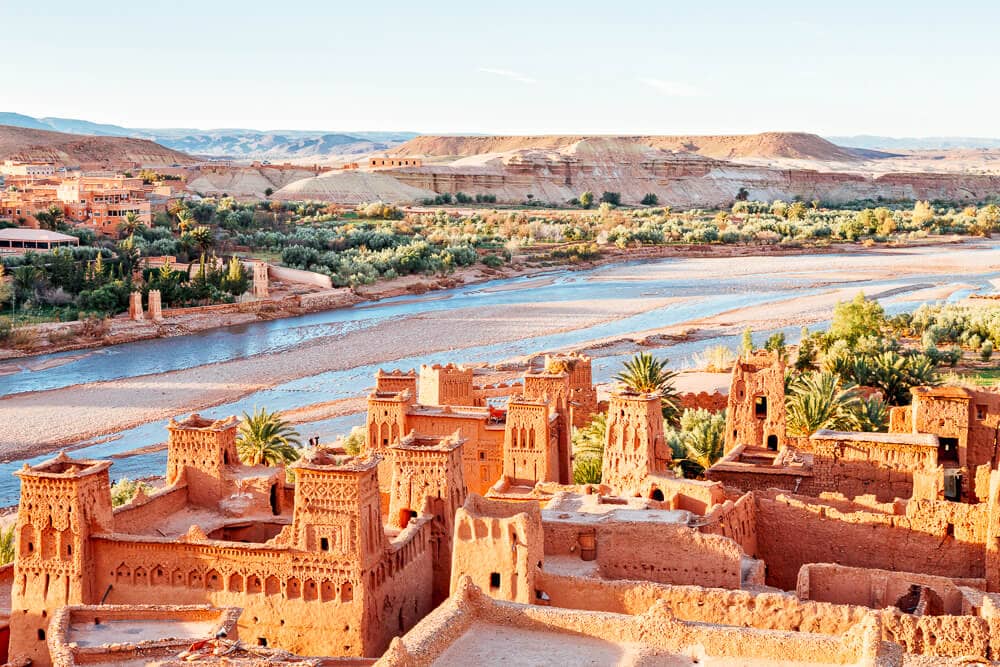
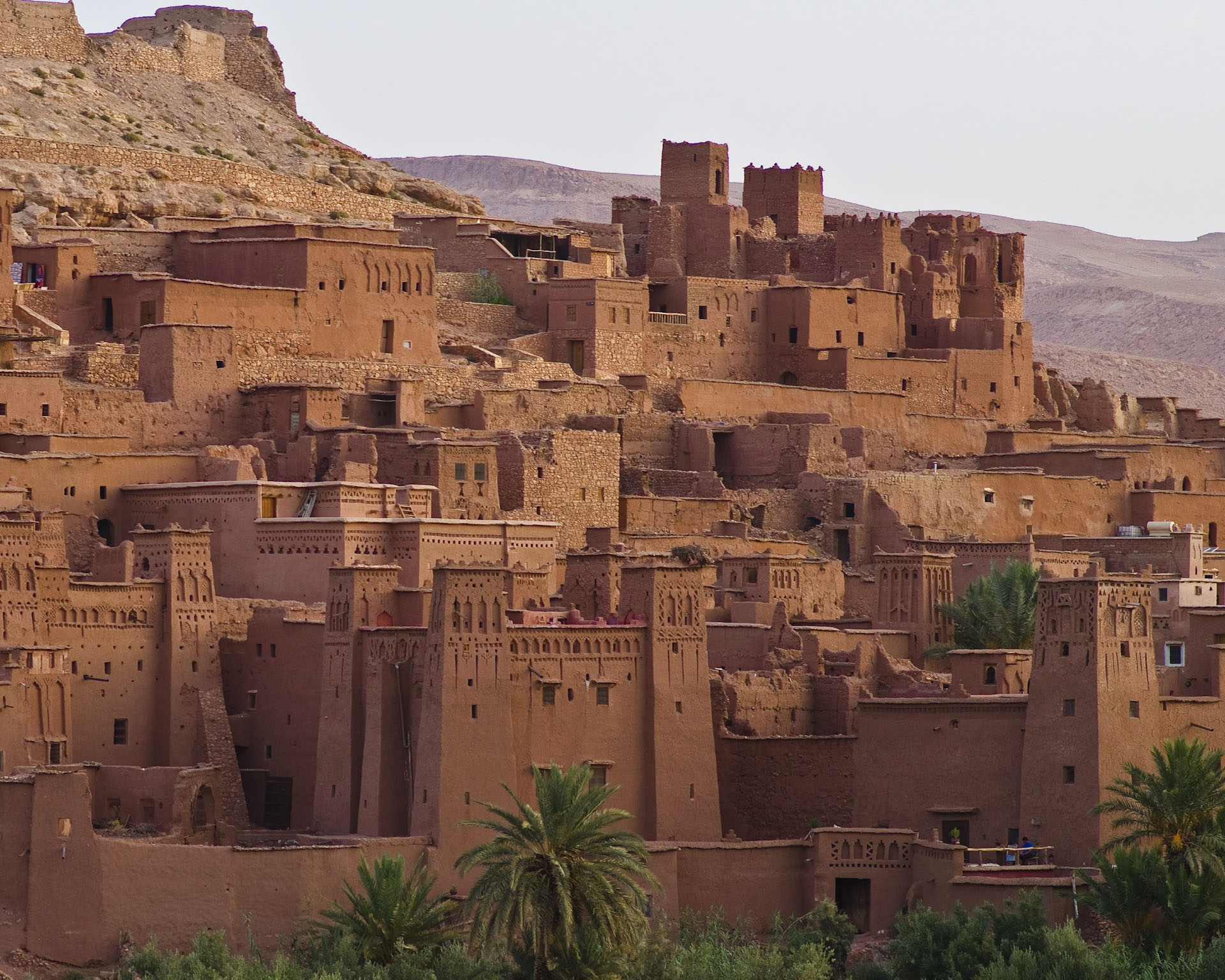
Nestled in the foothills of the High Atlas Mountains, the Ksar of Ait Benhaddou is an extraordinary example of traditional Moroccan earthen architecture and a striking UNESCO World Heritage site. This fortified village, composed of intricately decorated mud-brick dwellings, kasbahs, and a mosque, appears to rise organically from the desert landscape. Its dramatic ochre hues and ancient allure have made it a popular filming location for numerous Hollywood blockbusters, including Gladiator and Game of Thrones. A walk through its narrow passages and up to the granary at the summit offers panoramic views of the surrounding valley, transporting visitors to a bygone era of trans-Saharan trade routes and Berber tribal life.
Volubilis: Roman Echoes in North Africa
For a glimpse into Morocco’s Roman past, the ancient city of Volubilis is an unmissable UNESCO World Heritage site. Located in a fertile plain between Meknes and Fes, these remarkably well-preserved ruins offer a vivid insight into Roman civilization in North Africa. Visitors can explore grand public buildings like the Triumphal Arch, the Capitol, and the Basilica, as well as the remains of wealthy private villas adorned with stunning mosaics depicting mythological scenes. Volubilis stands as a powerful testament to the Roman Empire’s reach and its enduring legacy on the Moroccan landscape.
Essaouira: The Coastal Fortress
On the Atlantic coast, the charming city of Essaouira, another UNESCO World Heritage site, presents a unique blend of Moroccan and European influences. Its well-preserved 18th-century fortified medina, with its distinctive blue and white houses, wide boulevards, and bustling fishing port, reflects its past as a major trading post. The Portuguese, French, and local Arab and Berber communities all contributed to its distinctive architecture.
The impressive Skala de la Ville and Skala du Port, fortified ramparts lined with ancient brass cannons, offer breathtaking views of the ocean and the medina. Essaouira’s bohemian atmosphere, its vibrant art scene, and its reputation as a hub for Gnawa music – a unique spiritual and trance-inducing genre – add another layer to its rich cultural tapestry, showcasing its intangible heritage alongside its physical structures.
The Intangible Threads: A Deeper Connection
Beyond the physical grandeur of its sites, Morocco’s cultural heritage is woven into its daily life. The art of zellige (geometric mosaic tiling), Tadelakt (lime plasterwork), and intricate wood carving seen in palaces and madrasas are not just decorations; they are living traditions passed down through generations. The melodic calls of storytellers in Djemaa el-Fna, the rhythmic beats of Gnawa musicians, the complex patterns of calligraphy, and the exquisite flavors of Moroccan cuisine (which itself tells a story of trade and conquest) are all integral components of this rich heritage.
Conclusion
Exploring Morocco’s cultural heritage sites is an immersive journey that transcends mere tourism. It is an opportunity to connect with a history that is both ancient and vibrantly alive, to witness the enduring legacy of diverse civilizations, and to experience the profound warmth and hospitality of the Moroccan people. Each site, from the bustling medinas to the serene desert kasbahs, from Roman ruins to coastal fortresses, offers a unique window into the soul of this captivating nation. Morocco’s timeless tapestry of culture invites every traveler to unravel its threads, promising an unforgettable adventure into the heart of its extraordinary past.