


Bhutan: The Last Shangri-La’s Untamed Heart – A Deep Dive into Adventure Activities
Bhutan, often known as the "Land of the Thunder Dragon" and revered as the last remaining Vajrayana Buddhist kingdom, conjures images of serene monasteries perched precariously on cliffs, lush emerald valleys, and a culture deeply rooted in spirituality and Gross National Happiness. For decades, its carefully managed tourism policy, emphasizing "High Value, Low Impact," has maintained an aura of exclusivity and pristine beauty. While many associate Bhutan primarily with cultural immersion and spiritual retreats, beneath its tranquil surface lies an adventurous heart, offering an exhilarating array of activities for those seeking thrill amidst unparalleled natural beauty and profound cultural encounters.
Far from being solely a destination for quiet contemplation, Bhutan’s dramatic Himalayan landscape, pristine rivers, and dense forests provide a magnificent playground for adventurers. From some of the world’s most challenging treks to white-water rafting, mountain biking, and even unique cultural adventures, Bhutan promises an experience that is as physically stimulating as it is soul-stirring. This article delves into the diverse adventure activities that beckon travelers to explore the untamed spirit of Bhutan.
1. Trekking and Hiking: Scaling the Spiritual Peaks
Bhutan’s majestic Himalayas are a trekker’s paradise, offering trails that range from gentle day hikes to multi-week expeditions through some of the most remote and untouched landscapes on Earth. The trails wind through ancient forests, past traditional villages, alongside glacial lakes, and up to breathtaking mountain passes adorned with prayer flags.
Iconic Day Hikes:
No visit to Bhutan is complete without the Taktsang Goemba (Tiger’s Nest Monastery) hike. Perched dramatically on a cliff 900 meters above the Paro Valley, reaching this sacred site is an adventure in itself. The challenging ascent, typically taking 2-3 hours one way, rewards hikers with unparalleled views of the monastery and the surrounding valleys, making every step worthwhile. It’s a journey not just for the body, but for the soul, embodying the spiritual adventure Bhutan offers.
Another popular day hike is the Lungchutse Lhakhang hike from Dochula Pass, offering panoramic views of the eastern Himalayas, including the towering peaks of Masagang, Tsendagang, and Gangkar Puensum (Bhutan’s highest unclimbed peak).
Moderate Treks:
For those seeking a multi-day adventure without extreme challenges, the Druk Path Trek is an excellent choice. This 5-day, 4-night trek connects Paro and Thimphu, passing through rhododendron forests, apple orchards, and serene lakes like Jimilangtsho. It offers stunning views of Mount Gangkar Puensum and allows trekkers to visit ancient monasteries and remote villages, providing a glimpse into rural Bhutanese life. The relatively moderate altitude (max 4,200m) makes it accessible to most fit trekkers.
The Gangtey Nature Trail in the beautiful Phobjikha Valley is another fantastic moderate option. This relatively flat 90-minute walk through meadows and forests is particularly popular in winter (November-March) when the valley becomes home to thousands of endangered Black-necked Cranes. It’s an adventure in observation and appreciation of pristine nature.
Challenging Expeditions:
For the serious adventurer, Bhutan offers some of the most arduous and rewarding treks in the world.
-
Jhomolhari Trek: A classic 8-9 day trek that takes adventurers to the base camp of Mount Jhomolhari (7,326m), Bhutan’s second-highest peak. Starting from Paro, the trail ascends through alpine meadows, yak pastures, and dramatic landscapes, offering close-up views of Jhomolhari and Jichu Drake. Trekkers encounter diverse flora and fauna, including blue sheep and Himalayan griffons, and experience the hospitality of nomadic yak herders.
-
Laya-Gasa Trek: An extension of the Jhomolhari trek, this 12-14 day journey is significantly more challenging, crossing high passes (up to 4,900m) and leading to the remote villages of Laya and Gasa. It offers a rare opportunity to interact with the Layaps, a unique semi-nomadic community, and to soak in the therapeutic hot springs of Gasa. The rugged terrain and isolation make this a true wilderness adventure.
-
The Snowman Trek: Widely considered one of the most difficult treks in the world, the Snowman Trek is an epic 24-26 day expedition. It traverses some of the most remote and high-altitude regions of Bhutan, crossing 11 passes above 4,500 meters, with several exceeding 5,000 meters. This trek is for the truly experienced and resilient, offering unparalleled views of Bhutan’s highest peaks, pristine glaciers, and a profound sense of solitude in an untouched wilderness. The unpredictable weather and extreme conditions add to its legendary status.
All treks in Bhutan require a licensed guide, ensuring safety, cultural understanding, and adherence to environmental regulations.
2. River Adventures: Rafting and Kayaking through Pristine Waters
Bhutan’s rivers, fed by glacial meltwater from the Himalayas, are among the most pristine and unpolluted in the world. They offer thrilling opportunities for white-water rafting and kayaking amidst spectacular scenery. The main rivers for these activities are the Mo Chhu and Pho Chhu in Punakha, and the Wang Chhu (Raidak) near Thimphu.
White-Water Rafting:
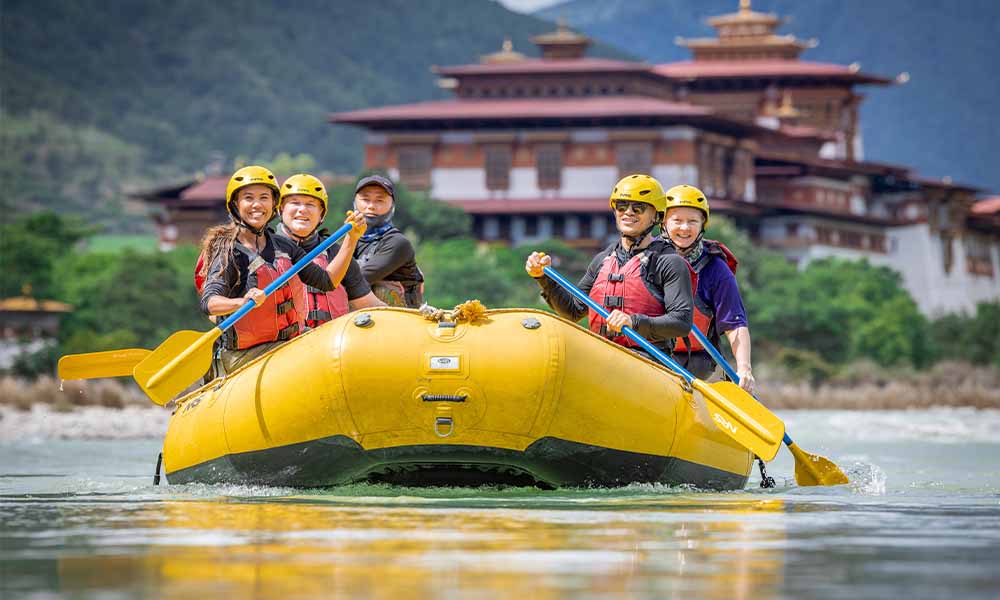
The Pho Chhu (Male River) and Mo Chhu (Female River) in Punakha are the most popular spots for rafting. The Pho Chhu, with its faster currents and approximately 15 rapids (Class II-IV), offers a more exhilarating experience, suitable for those seeking a decent thrill. The Mo Chhu, on the other hand, is gentler, with around 10 relatively mild rapids (Class I-II), making it perfect for families or those looking for a scenic and relaxed float down the river, past the magnificent Punakha Dzong.
Rafting in Bhutan is not just about the rapids; it’s an immersion in nature. The riverbanks are often dotted with traditional houses, prayer flags, and lush vegetation, providing breathtaking backdrops. Guides are mandatory, ensuring safety and providing insights into the local environment and culture.
Kayaking:
Kayaking offers a more intimate connection with Bhutan’s rivers. Experienced kayakers can explore various stretches of the Mo Chhu and Pho Chhu, navigating rapids and enjoying the tranquil sections. Kayaking allows for greater maneuverability and a closer perspective of the river’s ecosystem and the surrounding landscapes. It’s an ideal activity for those who prefer to paddle their own adventure.
3. Mountain Biking: Cycling through the Dragon Kingdom
Bhutan’s mountainous terrain, crisscrossed by ancient trails, farm roads, and newly constructed highways, presents an exciting challenge for mountain bikers. The sport is gaining popularity, with operators offering a range of tours from half-day excursions to multi-day epic rides.
Diverse Terrain:
Biking routes vary from gentle downhill rides through valleys to strenuous climbs up mountain passes and technical singletracks. The most popular areas for mountain biking include the valleys of Paro, Thimphu, Punakha, and Phobjikha.
- Paro Valley: Offers scenic rides past rice paddies, traditional farmhouses, and monasteries, with options to climb to higher viewpoints.
- Thimphu Valley: Features routes around the capital city, including rides to Buddha Dordenma (Giant Buddha statue) and various monasteries, offering a mix of paved roads and dirt tracks.
- Phobjikha Valley: A relatively flat and wide glacial valley, ideal for leisurely rides, especially during the crane season, offering unparalleled natural beauty.
- Punakha Valley: Combines river views with rides through rural villages and to significant landmarks like the Chimi Lhakhang (Fertility Temple).
Mountain biking in Bhutan is an incredible way to experience the country’s diverse landscapes, interact with local communities, and witness rural life up close. Riders often pass through dense forests, across suspension bridges, and alongside murmuring streams, with every turn revealing a new, stunning vista. Specialized mountain bikes and safety gear are readily available for rent, and guided tours ensure a safe and enriching experience.
4. Cultural Adventures: Archery, Hot Stone Baths, and Festivals
While physical prowess is central to many adventures, Bhutan offers unique "cultural adventures" that immerse travelers in its rich traditions and provide unforgettable experiences.
Archery (Dha): As Bhutan’s national sport, archery is more than just a pastime; it’s a vibrant cultural event. Visitors can witness local tournaments, often accompanied by singing, dancing, and playful taunts, or even try their hand at shooting traditional bamboo bows. It’s an exciting and authentic way to connect with Bhutanese culture.
Traditional Hot Stone Baths (Dotsho): After a long day of trekking or biking, a traditional hot stone bath is a therapeutic adventure. River stones are heated and then immersed in a wooden tub filled with water and local herbs, releasing minerals and heat that are believed to have medicinal properties. It’s a deeply relaxing and culturally significant experience.
Farm Stays: For an authentic cultural adventure, consider a farm stay. Living with a Bhutanese family in a traditional farmhouse allows visitors to participate in daily chores, learn about local customs, enjoy home-cooked meals, and experience the warmth of Bhutanese hospitality firsthand.
Festivals (Tshechus): Attending a Tshechu (religious festival) is a vibrant and immersive cultural adventure. These annual events feature colorful masked dances (cham dances), blessings, and elaborate traditional costumes, providing a window into Bhutan’s spiritual beliefs and artistic heritage.
5. Wildlife and Nature Exploration: Birdwatching and Wilderness Safaris
Bhutan’s commitment to conservation has resulted in over 70% of its land remaining under forest cover, making it a haven for diverse wildlife and a paradise for nature lovers.
Birdwatching: With over 700 species of birds, including many rare and endangered ones like the Black-necked Crane, Rufous-necked Hornbill, and Beautiful Nuthatch, Bhutan is a prime birdwatching destination. The Phobjikha Valley, Bumdeling Wildlife Sanctuary, and various national parks offer excellent opportunities.
Wildlife Viewing: While sightings are rare, Bhutan is home to iconic Himalayan wildlife such as the elusive Snow Leopard, Takin (Bhutan’s national animal), Red Panda, Himalayan Black Bear, and various deer species. National parks like Jigme Dorji National Park, Royal Manas National Park, and Phibsoo Wildlife Sanctuary offer the best chances for wildlife spotting, often requiring guided treks into the wilderness.
Planning Your Bhutanese Adventure: Essential Considerations
To embark on an adventure in Bhutan, several unique factors must be considered:
- Daily Tariff: Bhutan operates on a "High Value, Low Impact" tourism policy, requiring visitors (except Indian nationals) to pay a Sustainable Development Fee (SDF) of USD 100 per person per night. This fee contributes to free education, healthcare, infrastructure, and environmental conservation, ensuring tourism benefits the Bhutanese people and preserves their unique culture and environment.
- Guided Tours: All tourists (except Indian nationals) must travel with a licensed Bhutanese tour operator or their international partners. This ensures safety, provides access to permits, and facilitates cultural exchange.
- Best Time to Visit: Spring (March-May) and Autumn (September-November) offer the most pleasant weather for trekking and outdoor activities, with clear skies and moderate temperatures. Winter (December-February) is ideal for cultural tours and observing Black-necked Cranes.
- Altitude Sickness: Many adventure activities, especially treks, take place at high altitudes. It’s crucial to acclimatize properly, stay hydrated, and be aware of the symptoms of Acute Mountain Sickness (AMS).
- Respect for Culture and Environment: Bhutanese culture is deeply spiritual, and environmental conservation is paramount. Adventurers are expected to respect local customs, dress modestly when visiting religious sites, and leave no trace behind.
Conclusion: A Transformative Adventure
Bhutan offers an unparalleled blend of exhilarating adventure and profound cultural immersion. It’s a destination where scaling a rugged mountain peak can lead to a spiritual awakening, where rafting down a pristine river offers glimpses of ancient monasteries, and where cycling through a valley brings you closer to a way of life untouched by modernity. The adventure activities in Bhutan are not merely about pushing physical boundaries; they are about connecting with a pristine environment, understanding a unique culture, and discovering a deeper sense of self.
For the discerning traveler seeking more than just a vacation – one who yearns for challenge, beauty, and a truly transformative experience – Bhutan’s untamed heart awaits. It promises an adventure that will not only thrill the senses but also nourish the soul, leaving an indelible mark long after the journey ends.
