

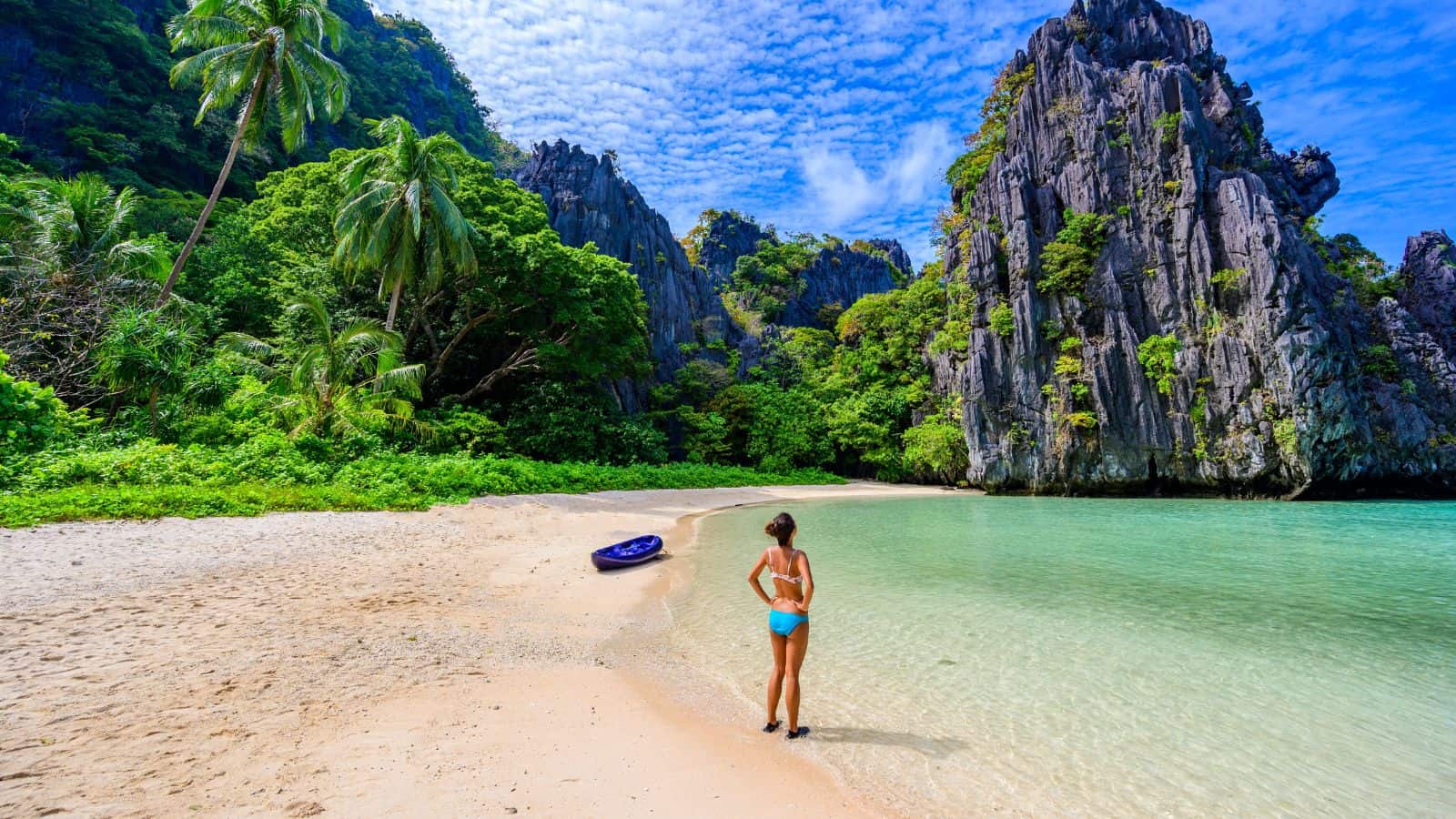
The Philippines’ Hidden Frontiers: Unveiling the Secrets of Its Unexplored Islands
The Philippines, an archipelago nation often hailed as the "Pearl of the Orient Seas," is renowned globally for its stunning white-sand beaches, vibrant coral reefs, and a bewildering diversity of flora and fauna. With over 7,641 islands (a number that can fluctuate with the tide and new surveys), it presents an image of an endless tropical paradise, a mosaic of land and sea. Yet, beneath the well-trodden paths of Boracay, Palawan, and Siargao lies a profound secret: a vast number of these islands remain largely, if not entirely, unexplored, holding untold mysteries and ecological treasures.
The sheer numerical scale of the Philippine archipelago is difficult to grasp. While many of its larger islands are home to bustling cities, agricultural landscapes, and established tourism industries, thousands of smaller islets and landmasses dot its vast maritime territory. These range from uninhabited rocks barely breaking the surface to substantial landmasses cloaked in dense, ancient forests, many of which have seen little to no human presence beyond occasional visits from local fishermen or indigenous groups. These unexplored islands represent one of the last true frontiers on Earth, offering a tantalizing glimpse into a world untouched by modern civilization and holding immense potential for scientific discovery, cultural understanding, and conservation.
A Geographic Labyrinth: Why So Many Remain Unknown
The primary reason for the unexplored nature of so many Philippine islands lies in their geography and the logistical challenges they present. The archipelago is a product of intense tectonic activity, sitting on the Pacific Ring of Fire. This has resulted in a landscape characterized by rugged coastlines, steep volcanic peaks, and dense, impenetrable rainforests. Many islands are surrounded by treacherous currents, unmapped reefs, and deep waters, making access difficult and dangerous for conventional vessels.
Furthermore, the lack of infrastructure is a significant barrier. Unlike popular tourist destinations with airports and well-maintained roads, these remote islands often lack any form of pier, landing strip, or even clear paths. Reaching them typically requires specialized, shallow-draft boats, expert local knowledge of tides and currents, and a willingness to brave unpredictable weather conditions. Even upon landing, the interior of these islands can be a formidable challenge, with thick vegetation, venomous creatures, and unforgiving terrain making overland exploration arduous and slow.
The classification of "unexplored" itself can be nuanced. Some islands might be known to local communities but have never been scientifically surveyed or mapped in detail. Others might be completely unknown even to nearby populations, perhaps due to their small size, distance from larger settlements, or historical reasons. The rapid advancements in satellite mapping have certainly improved our understanding of their physical presence, but satellite images can only reveal so much; the true ecological and cultural richness requires on-the-ground investigation.
Biodiversity Hotspots and Ecological Treasures
The Philippines is recognized as one of the world’s 17 megadiverse countries, harboring a significant percentage of global biodiversity. Its isolation as an archipelago, coupled with a wide range of climatic and geological conditions, has fostered a remarkable degree of endemism – species found nowhere else on Earth. The unexplored islands are, therefore, potential goldmines for biologists, botanists, and zoologists.
Imagine stepping onto an island where no scientist has ever set foot. The possibilities are breathtaking:
- New Species: Scientists estimate that thousands of species in the Philippines remain undiscovered. These islands could harbor entirely new species of plants, insects, amphibians, reptiles, birds, and even small mammals. Unique ecological niches on these islands, shaped by millennia of isolation, could have led to the evolution of highly specialized life forms.
- Pristine Ecosystems: Many of the Philippines’ old-growth forests have been decimated by logging. These remote islands, however, could still preserve pristine, ancient rainforests, acting as vital carbon sinks and living laboratories for ecological study. Similarly, their surrounding waters likely boast untouched coral reefs, thriving with diverse marine life, free from the pressures of overfishing and pollution that plague more accessible areas.
- Geological Wonders: Volcanic activity and limestone karst formations are common throughout the Philippines. Unexplored islands could reveal unique geological formations, hidden caves, underground rivers, or even previously unrecorded geothermal features, offering insights into the Earth’s processes.
- Genetic Resources: The unique genetic makeup of species found on these islands could hold valuable secrets for medicine, agriculture, and biotechnology. Studying their adaptations to specific environments could provide crucial data for conservation efforts in a changing climate.
These ecological treasures are not merely academic curiosities; they represent irreplaceable components of global biodiversity. Their preservation is paramount, not just for scientific advancement, but for the health of the planet.
Cultural Enigmas and Indigenous Heritage
Beyond their natural wonders, the unexplored islands may also hold clues to the Philippines’ rich human history and cultural heritage. While it’s unlikely to find truly "lost tribes" in the conventional sense in the 21st century, some of these islands might be home to small, highly isolated indigenous communities whose ways of life, languages, and belief systems have remained largely untouched by external influences. These communities could offer invaluable insights into pre-colonial Filipino cultures, traditional ecological knowledge, and sustainable living practices.
Ethical considerations are paramount when contemplating contact with such communities. Their right to self-determination and the potential for disruption of their way of life must be respected above all else. Any interaction would require extreme sensitivity, careful planning, and a deep understanding of indigenous rights.
Furthermore, these islands could contain significant archaeological sites. Ancient burial grounds, tools, pottery, or remnants of early human settlements could be preserved beneath the forest canopy or within coastal caves. Such discoveries could rewrite chapters of Philippine history, shedding light on ancient trade routes, migration patterns, and the ingenuity of early inhabitants.
The Lure of the Unknown: Adventure and Scientific Pursuit
For scientists, explorers, and conservationists, the unexplored islands of the Philippines represent the ultimate frontier. The allure is not just the thrill of discovery but the profound responsibility that comes with it. Expeditions to these areas are not for the faint of heart. They require meticulous planning, specialized skills, and a deep respect for the environment.
Modern exploration often involves a multidisciplinary approach:
- Biological Surveys: Teams of biologists and botanists meticulously document flora and fauna, collecting samples for genetic analysis and identifying new species.
- Marine Research: Oceanographers and marine biologists investigate coral reefs, fish populations, and oceanographic conditions in surrounding waters.
- Geological Studies: Geologists analyze rock formations, soil composition, and volcanic activity to understand the island’s formation and ongoing processes.
- Anthropological and Archaeological Research: If evidence of human habitation is found, anthropologists and archaeologists may conduct careful studies, always with ethical considerations for potential indigenous communities.
- Mapping and Remote Sensing: Advanced technologies like drones, LiDAR (Light Detection and Ranging), and high-resolution satellite imagery are now crucial for creating detailed maps and understanding the topography and vegetation without extensive ground penetration.
These expeditions are not merely about "finding things"; they are about understanding complex ecosystems, gathering baseline data before potential changes, and informing future conservation strategies.
Challenges and the Imperative of Responsible Exploration
The exploration of these hidden frontiers comes with significant challenges and a heavy responsibility.
- Conservation vs. Discovery: The very act of exploring can, inadvertently, impact fragile ecosystems. Careless footsteps, introduction of invasive species, or even the scent of human presence can disturb wildlife. Therefore, a "leave no trace" philosophy is critical, and many argue for minimal human intervention.
- Threats: Even without direct human presence, these islands are not immune to global threats. Climate change, manifested through rising sea levels and ocean acidification, poses a significant danger to coastal ecosystems and coral reefs. Illegal fishing, poaching, and logging activities, though harder to conduct, can still occur if surveillance is lax.
- Funding and Logistics: Scientific expeditions are expensive and logistically complex, requiring significant funding, specialized equipment, and highly trained personnel.
- Ownership and Governance: The legal status and ownership of many smaller, uninhabited islands can be ambiguous, complicating research permits and conservation efforts.
The imperative is clear: any future exploration must be conducted with the utmost care, guided by principles of sustainable development and conservation. This means prioritizing scientific research, collaborating with local communities, respecting indigenous rights, and implementing robust protective measures to ensure that the wonders discovered are preserved for generations to come.
The Future of Philippine Exploration
As technology advances and our understanding of the planet’s interconnectedness grows, the allure of the unexplored islands of the Philippines will only intensify. They stand as a testament to the Earth’s enduring capacity for mystery and wonder. They challenge us to push the boundaries of our knowledge while simultaneously demanding a profound respect for the natural world.
The future of these hidden frontiers likely involves a carefully balanced approach:
- Continued Scientific Surveys: Utilizing advanced remote sensing and targeted, low-impact expeditions to catalogue biodiversity and understand ecosystems.
- Strict Protection: Designating many of these islands and their surrounding waters as protected areas, restricting access to all but essential scientific and conservation personnel.
- Sustainable Ecotourism (Highly Controlled): For a select few, carefully managed, low-impact ecotourism might be considered, with stringent rules to ensure minimal environmental disturbance and direct benefits to local communities, but this must be approached with extreme caution.
- Empowering Local Guardians: Engaging and empowering local indigenous communities and coastal residents as stewards of these invaluable natural resources.
The unexplored islands of the Philippines are more than just uncharted territories on a map; they are living legacies, ancient sanctuaries of life, and silent witnesses to millennia of natural history. They remind us that even in a world increasingly mapped and understood, there remain profound secrets waiting to be discovered, and perhaps more importantly, protected. Their continued existence, untouched and pristine, offers a beacon of hope for biodiversity and a powerful reminder of the delicate balance between human curiosity and ecological preservation.
